I had never been down a mine but had heard about the dreadful working conditions in coal mines, particularly from a friend whose family moved away from Wales to ensure he and his brother never had to go down the mines. So when I noticed on the map that our road trip took us close to Springhill, NS and there was a museum which offered tours, I wanted to go. Springhill is known for two things; the singer Anne Murray, and coal mining, in particular the disasters that occurred in 1956 and 1958, which took the lives of 39 and 75 men respectively.
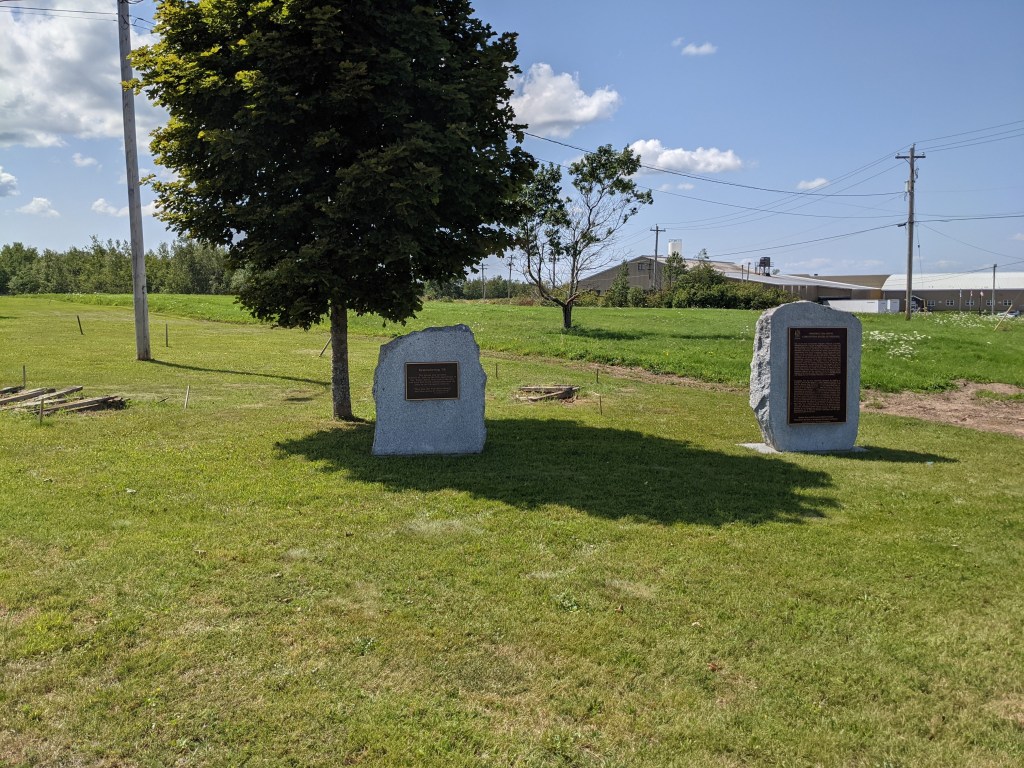
Coal mining has long ceased in Springhill. The mines that were the site of the disasters never reopened but are marked by historic plaques commemorating the significance of coal mining to Springhill and marking the 50th anniversary of the disaster, dedicated to the men and boys were worked the mines.
The tour at the Springhill Miners Museum is at another mine in the area that continued on a few years after the disasters, but was closed in the 1960s. The tour started inside the museum which is full of artifacts from the mines and personal items and equipment of the miners, and news items about the disasters. Especially moving is a video which includes original TV footage from the time of the 1958 ‘bump’ as they refer to the collapse of the mine, images of families waiting for news of their husbands/fathers/brothers/sons, plus interviews with the handful of men who miraculously survived 9 days trapped in the pitch black of the mine, without food and water, and with no way of knowing if they would ever be found. The last of these men passed away only 3 years ago.
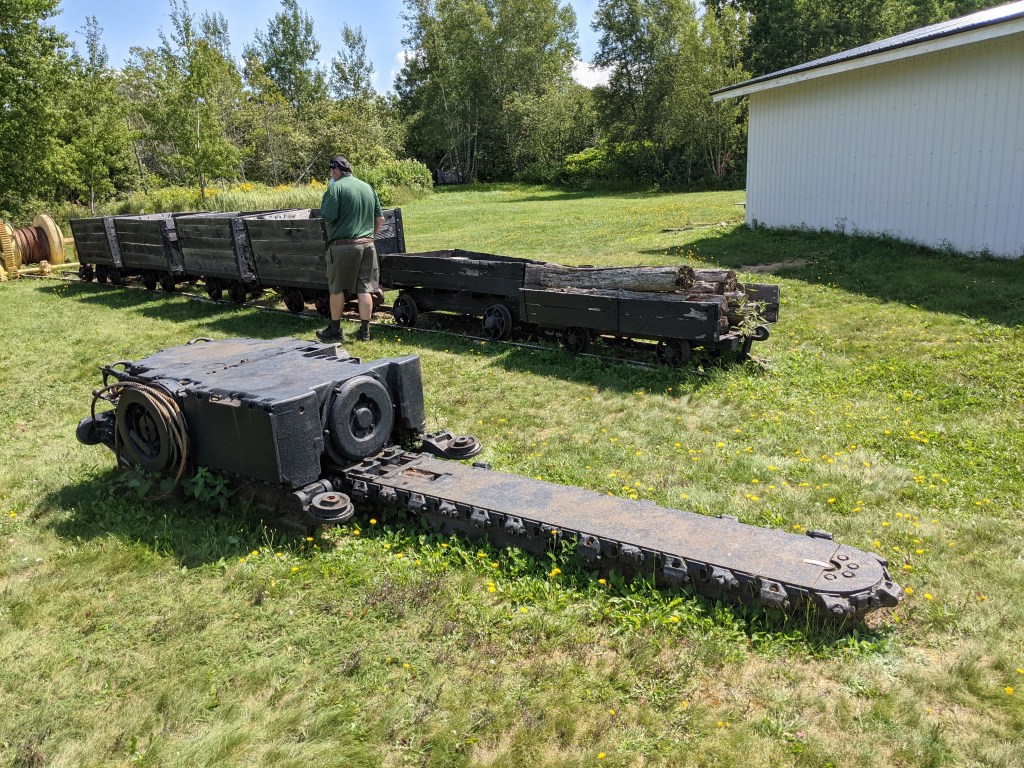
The tour starts outside the building where there are original pieces of equipment including coal carts and enormous saws that were used to get at the coal. As the tunnels were 13,000 feet deep, the men rode in carts down to the active locations, bent over due to limited head room. This took an hour each way before they could even start work. At first they were paid based on number of coal carts they filled, but this was changed to an hourly rate.
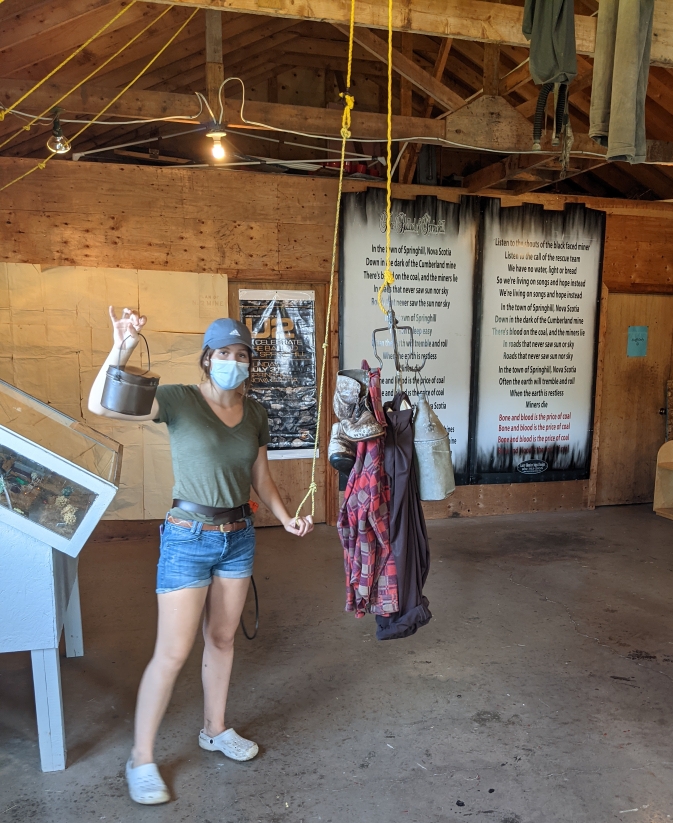
The tour then moved to the wash house where the miners would have changed into their work clothes, which were suspended from the ceiling, and showered before heading home at the end of day, trying to remove as much coal dust as possible.
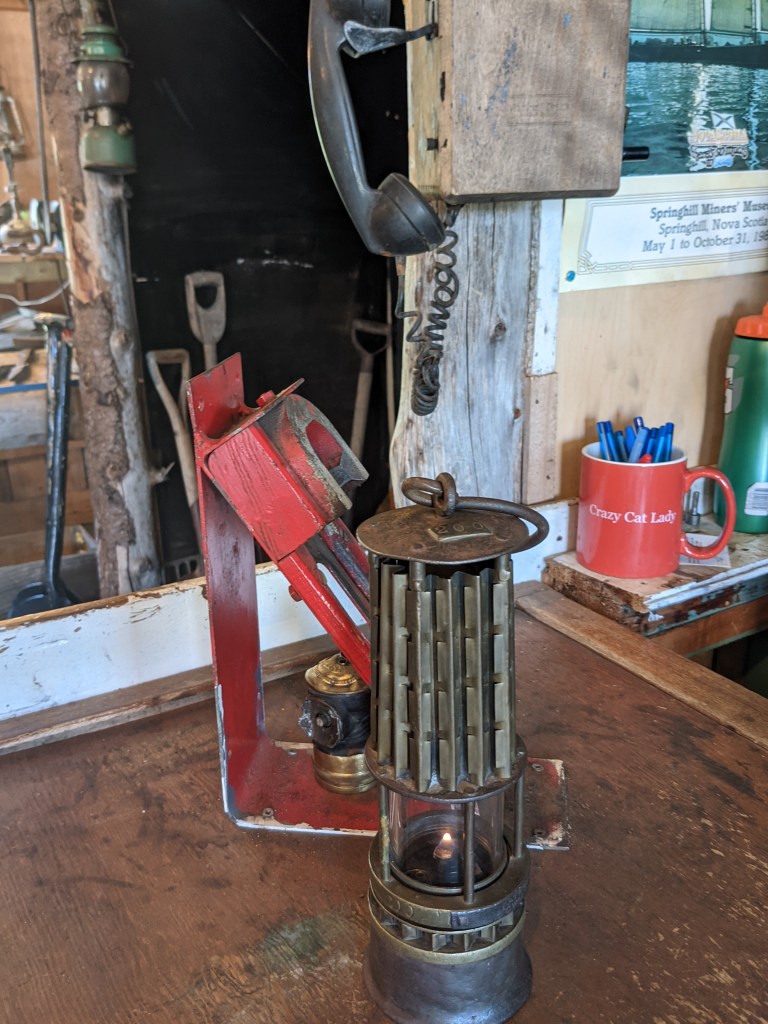
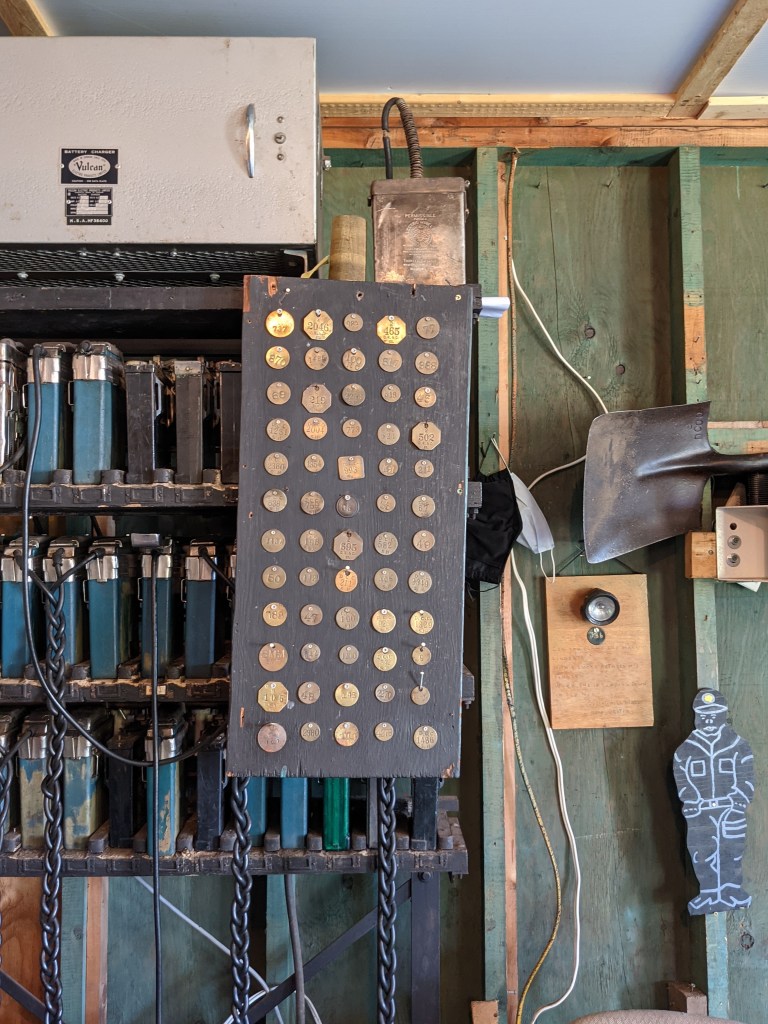
The next building was critical as it was where the miners donned their hardhats, picked up their light, and hung their number tag on a board which was used to ensure all miners were accounted for at the end of the day. The lights used at the time of the disaster were designed to last for 12 hours, but for safety purposes could only be opened by a special device above ground, to ensure no sparks in the mine. But this meant that there was no way to conserve power by turning the light off, so for those miners trapped for 9 days, they had no light at all. When we went to the mine our guide demonstrated the amount of light with her new, stronger light, which still seemed feeble, and then showed what it would have been like for the miners when the lights ran out. Apparently in total darkness like that you even lose the ability to properly orient yourself.
Next was to climb down the steps into the actual mine. It was an uncomfortable walk, ducking due to limited headroom, with slippery boards underneath our feet, water dripping on our heads, and a dirty railing to hold onto, and limited lighting. But this was a far better experience than the miners would have had, as we saw the much smaller tunnels they would have worked in, crouched over, with coal dust everywhere and the dangers of explosions or collapsed tunnels as they were down 13,000 feet, while we were only 300 feet in. Although the pumps are still being run, only the top part of the mine is kept clear and the rest of the tunnels are full of water.
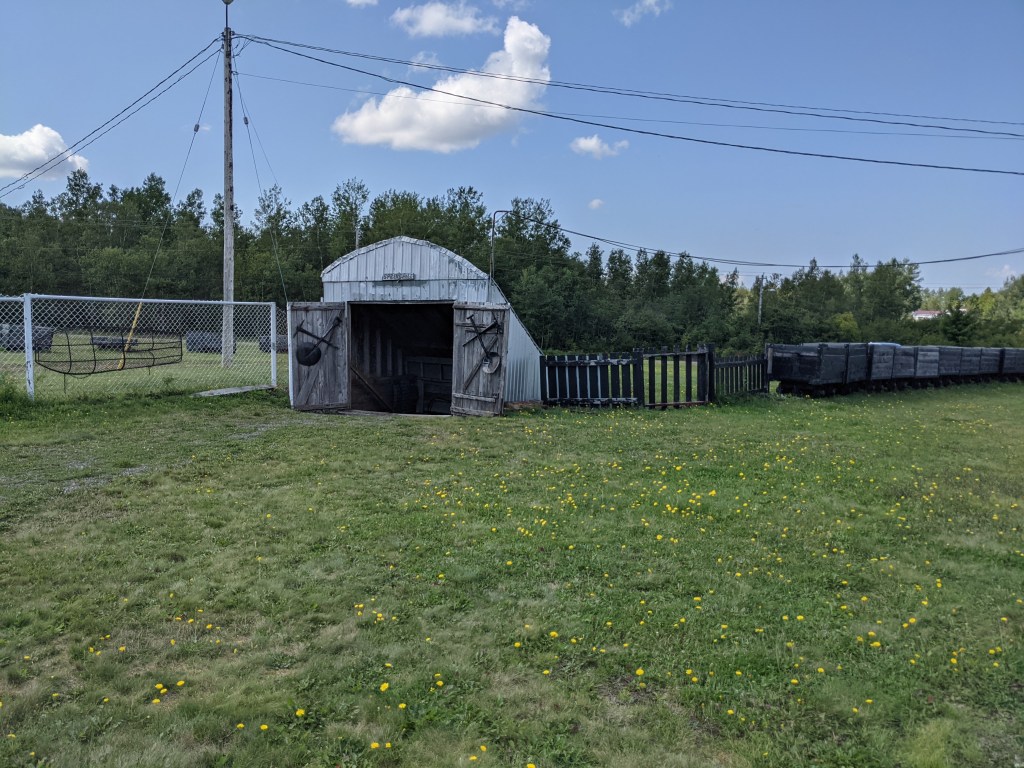
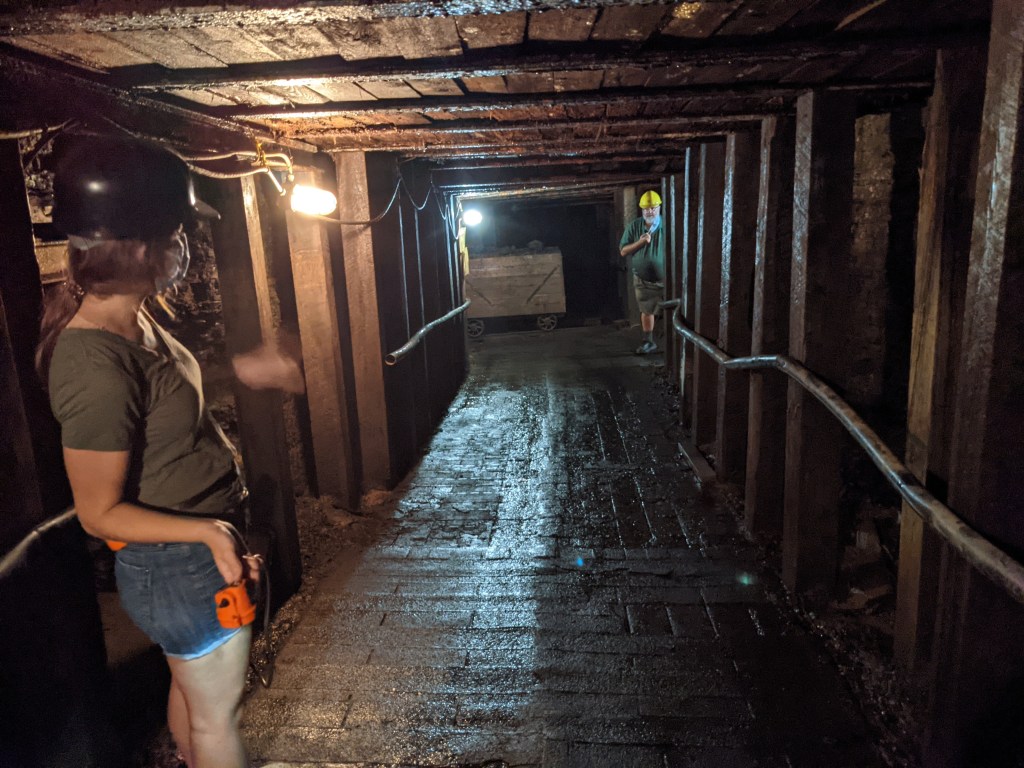
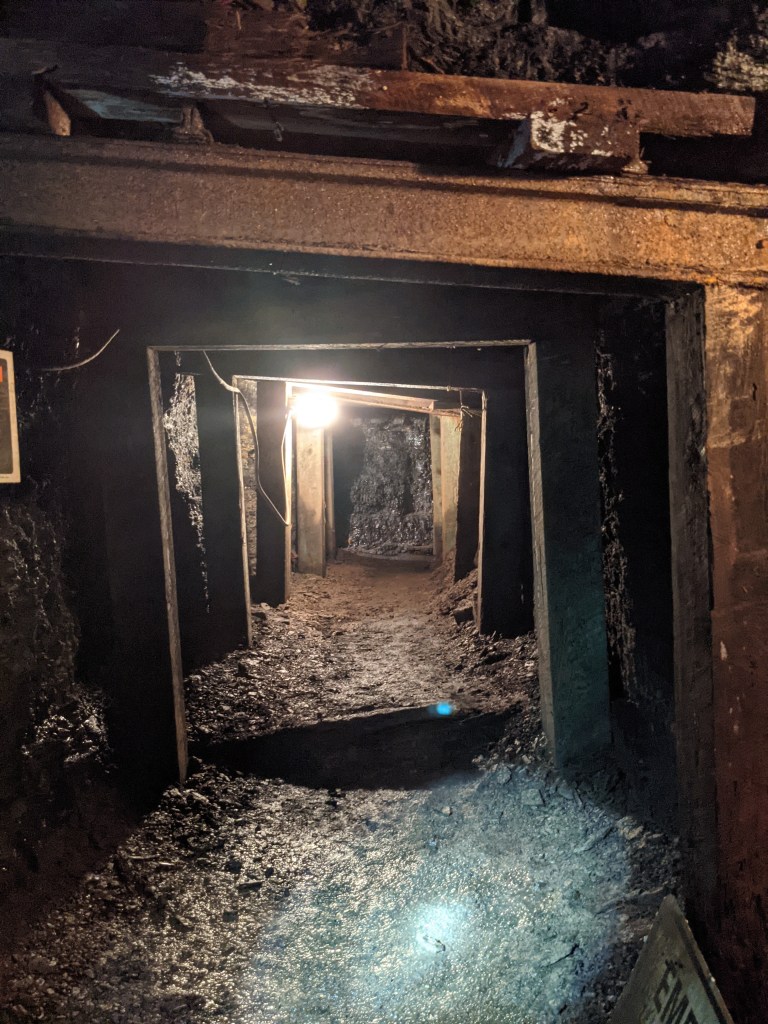
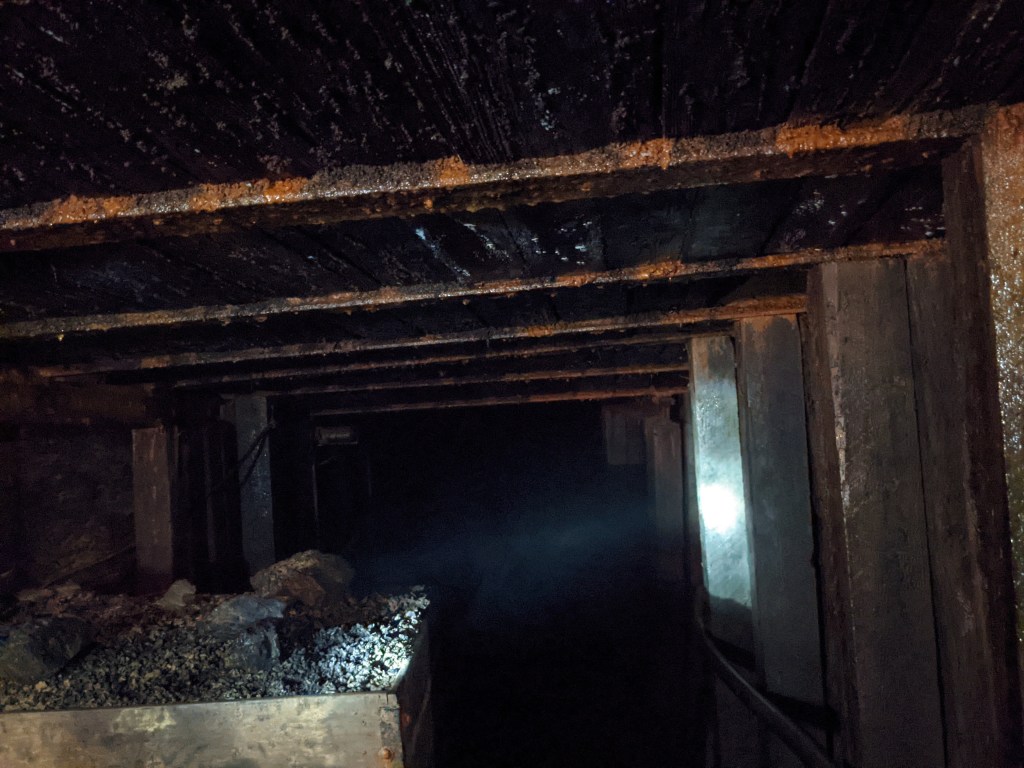
We were relieved to be out, with our guide following behind as she is required to be the last one out.
When we first arrived we were given small tags with numbers, which we placed on the board when we went into the mine and retrieved when back out, the way the miners would have done. We took these back to the gift shop, where they told us the story behind the miners whose number we had been given. This was a powerful way to personalize the experience, as my tag had belonged to a 31 year old single man who died in the 1958 ‘bump’, and Ken’s belonged to a married man with 5 children, who survived the 1956 explosion only to be killed in the 1958 disaster.
 Wandering with Wendy
Years ago we toured the mine in Glace Bay, Cape Breton Island. Very memorable!
LikeLike
What a way to make a living!
LikeLike
Good post Wendy. Not easy being a miner.
Sent from my iPhone
>
LikeLike
Hey Wendy, Nice write up and tour. Ian and I did this tour many years ago. Very interesting indeed. Hope all is well. It’s stifling here in Ottawa. Keep posting, hugs Rita
Sent from my iPad
>
LikeLike